Can Anthropic’s New Rules Stop Claude Code From Cloning Games?
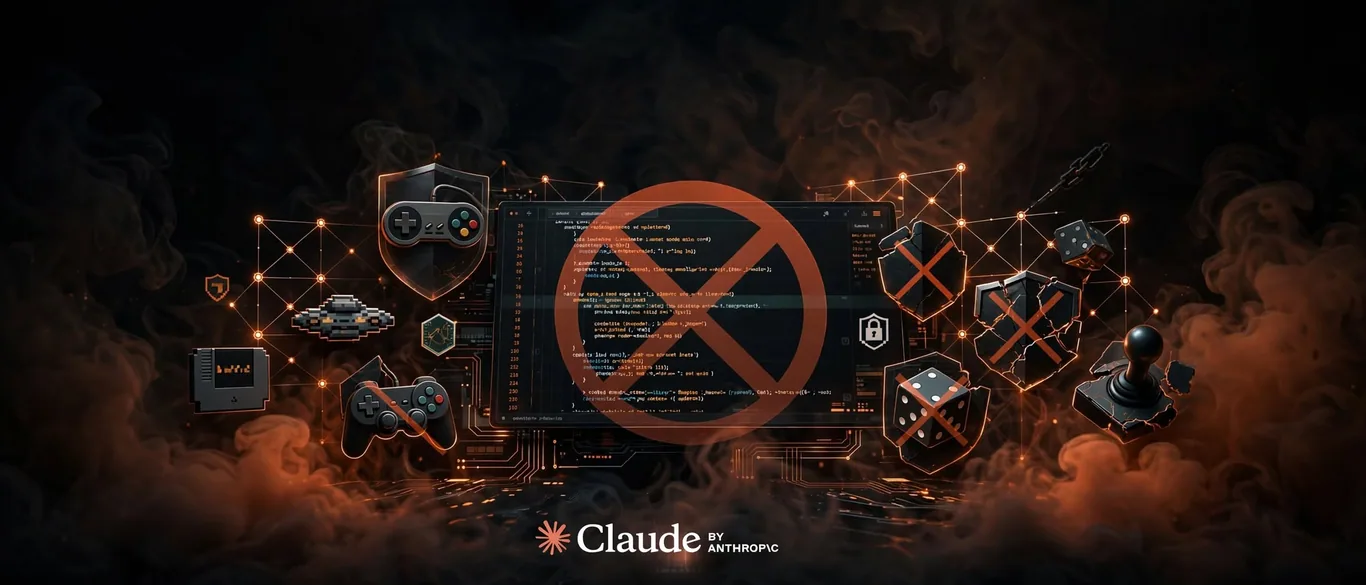
According to the Olhar Digital report, Anthropic recently updated its Claude Code assistant to prevent developers from using the AI to replicate copyrighted video games. The change was spotted in late October and alters how the underlying model handles requests involving existing commercial titles.
Why did Anthropic change the rules?
The update adds strict instructions to the Opus 5.5 model, explicitly forbidding it from reproducing a specific game even if the user attempts to disguise the request under a different name or label it as an original creation. Addy Osmani, a technical team member at Anthropic, confirmed the tweak on X, noting that two new sentences were added to curb copyright infringement.
The move comes as developers grow increasingly anxious over AI-generated asset replication. Recently, studio Digital Sun delayed public tests of its game ReVamp out of fear that onlookers would feed the demo into AI tools to generate copycat versions.
How does the restriction work in practice?
While exact clones are now restricted, the tool still fully supports original game development, genre-inspired projects (such as platformers, RPGs, and strategy games), and code built entirely from a user's own materials and ideas. However, as noted by Game Developer, these safety guidelines are not foolproof and can still be bypassed with clever prompting.
Verdict: who is affected by this update?
For everyday developers building original software or indie titles, the update changes very little in your Monday morning workflow. You can still leverage the AI to scaffold game loops, write shaders, or prototype mechanics. The restriction only impacts those attempting to directly copy existing intellectual property.
Sources
Frequently asked questions
- Can I still build indie games using Claude Code?
- Yes. Original projects, genre-based templates, and code built from your own assets remain fully allowed under the updated guidelines.
- How did Anthropic implement the restriction?
- The company added specific system instructions to the Opus 5.5 model to reject requests that attempt to replicate specific existing games.
- Are these restrictions completely foolproof?
- No. Industry analysts point out that safety instructions can still be circumvented through alternative prompting techniques.
Comments
0 commentsDeixe seu comentário
Be the first to comment.
Continue Reading
Can a $32M Open Model Beat Big Tech? Inside Ripple-65B
Ricursive launches open Ripple-65B coding model

WhatsApp Just Added AI Outpainting: How to Expand Photos Instantly
WhatsApp tests AI to expand photo backgrounds

Google's New AI Video Tool: A Pro Workflow for Cheap Clips
Google Omni 1.2 Flash cuts video costs