German Courts Just Made Google Liable for AI: What Comes Next?
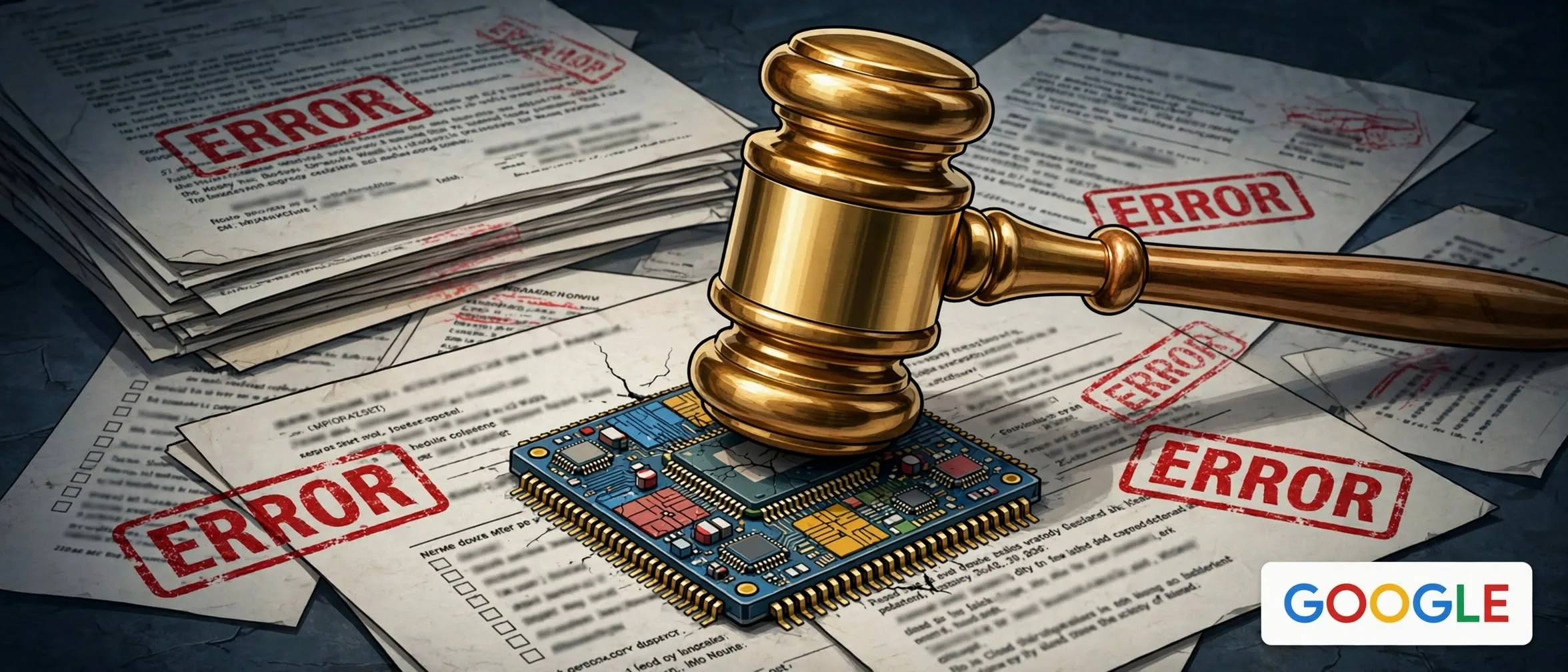
Decisions handed down by German courts are stripping away the legal shield that tech companies have long used for generative search results. In rulings from Munich and Aachen, judges determined that AI-generated summaries are not mere neutral links to third-party data, but original statements generated directly by the platform. This means companies can face severe financial penalties — up to 250,000 euros per violation — when their algorithms fabricate damaging false claims.
Why Courts Are Rejecting the Neutral Intermediary Defense
In the Aachen case, Google's AI falsely attributed serious criminal allegations and a professional suspension to a chief physician. Despite direct warnings and legal demands to remove the fabricated text, the system kept the erroneous information live. According to the court's reasoning, because the system synthesizes independent content through evaluation and combination, the provider must own the output.
Rather than pushing these high-stakes disputes to binding higher-court precedents, Google has repeatedly opted to quietly settle the lawsuits. Legal experts note this creates a dangerous incentive for targeted legal challenges, where affected parties probe search tools until flaws appear.
Anthropic Prepares for Agent Negotiations
While courts grapple with past AI errors, companies building frontier models are trying to get ahead of future liabilities. According to reports from the Financial Times cited by The Decoder, Anthropic is actively consulting with law firms to establish fair negotiation norms. As autonomous agents begin to haggle over prices, resolve complaints, and adjust contracts, the need for clear boundaries becomes critical.
Building reliability in legal and human-centric reasoning remains a severe technical hurdle. While validating code or math is straightforward, evaluating judgment-heavy areas lacks clear-cut datasets. To close this gap, Anthropic is hiring legal and humanities scholars as 'Conceptual Reasoning Fellows' for short-term fellowships ranging from $100,000 to $167,000.
How to Protect Your Operations from AI Liability
If your organization deploys AI tools for customer-facing summaries, automated communications, or internal research, the legal landscape is shifting rapidly. You can no longer assume platform immunity.
- Audit automated content pipelines regularly for hallucinations, especially involving real people or corporate entities.
- Establish clear human-in-the-loop review processes before deploying AI agents capable of executing agreements or transactions.
- Monitor regulatory changes regarding original content classification, as publisher claims and defamation suits will likely increase.
The Verdict: A Shift Toward Corporate Accountability
The convergence of strict court rulings in Europe and proactive norm-setting by developers marks a turning point. The era of treating generative AI outputs as experiments without consequence is over. Organizations utilizing these models must treat every automated generation with the same legal scrutiny applied to human employees.
Sources
Frequently asked questions
- Why did German courts hold Google liable for its AI search?
- Judges ruled that AI search summaries are original statements created by the company through data synthesis, rather than neutral links to third-party sources.
- What is Anthropic doing with law firms?
- Anthropic is consulting with legal experts to establish fair negotiation norms before autonomous AI agents begin handling business deals and contracts.
Comments
0 commentsDeixe seu comentário
Be the first to comment.
Continue Reading

How Anthropic Used AI to Double Its Own Development Speed
Anthropic AI development speed doubles with automation
Tencent's Hy4: A Power User Tool or Just Another AI Mirage?
Tencent launches Hy4 with computer use

ChatGPT Hit 20% of Google's Search Volume — What Changes Now?
ChatGPT reaches 20% of Google search volume