Google Gives Every Gemini Agent Its Own Isolated Cloud PC
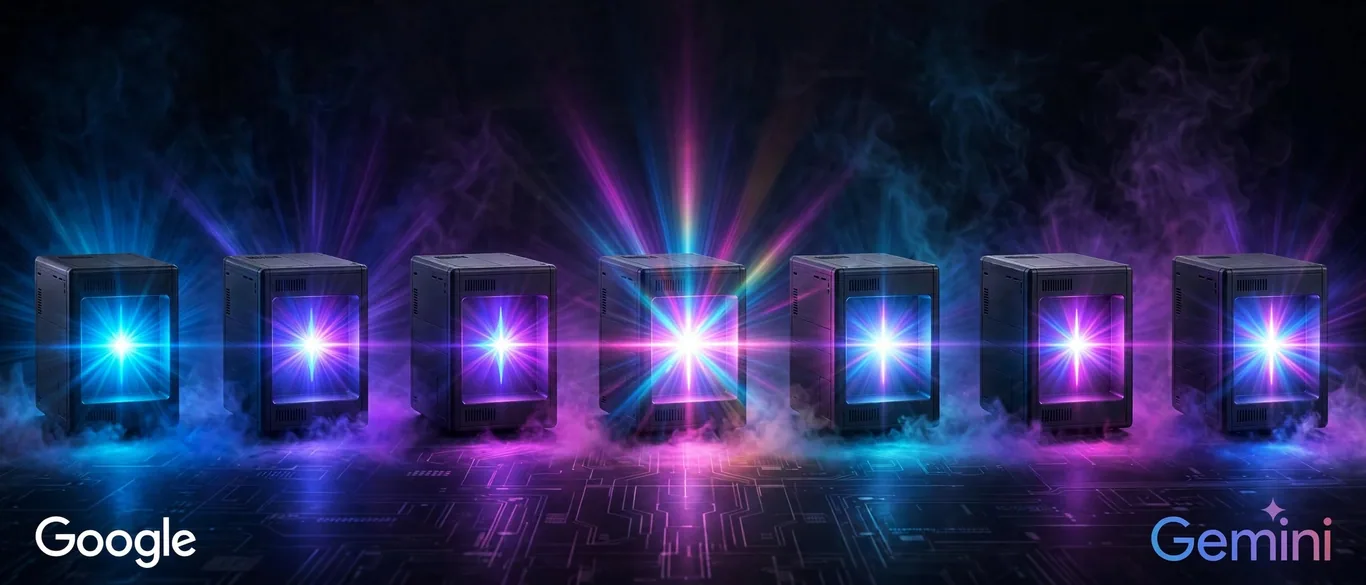
According to the-decoder.com, Google is rolling out the Agent Compute Engine, a runtime environment that assigns a dedicated, hardware-isolated micro virtual machine to every single AI agent. Powered by Google's proprietary Titanium chip, the architecture aims to fix the massive resource overhead and security vulnerabilities that come with running autonomous agents at scale.
How does hardware isolation change agent costs?
Running thousands of autonomous agents usually drains server resources because traditional virtual machines sit idle while waiting for instructions. Google's new setup automatically pauses the microVM the moment an agent goes idle, instantly freeing up machine memory for other tasks. Shared memory pools across these VMs also slash the overall cost of running heavy agentic workflows.
Google claims its open-sourced Kubernetes runtime, Agent Substrate, packs up to ten times as many agents onto a single server. In internal tests involving 200,000 active agents, the system completed a full suspend-and-resume cycle in under 500 milliseconds. For teams building complex automation pipelines, this removes the agonizing lag usually tied to spinning up virtual environments.
How to access and set up the engine
The Agent Compute Engine already powers Gemini behind the scenes and will open for public preview in the coming months. Enterprise developers will manage these environments through existing infrastructure tools like Cloud Run and Google Kubernetes Engine (GKE).
- Build or configure your autonomous agents using standard runtime tools.
- Integrate corporate identity providers such as Ping Identity or SailPoint for granular oversight.
- Deploy workloads through Cloud Run or GKE with built-in token tracking and model routing enabled.
Is it worth adopting for enterprise workflows?
If your team runs complex workflows that require handling sensitive data, the hardware-level isolation removes a major security blind spot. Traditional shared-runtime setups expose corporate networks if a rogue agent or prompt injection hijacks an instance. By confining each agent to its own microVM, containment is guaranteed.
However, the real test will be how smoothly third-party identity management and model routing integrate during high-volume production. For teams scaling beyond a handful of experimental scripts, the drop in infrastructure overhead makes this a worthwhile architectural shift.
Sources
Frequently asked questions
- What is Google's Agent Compute Engine?
- It is a runtime service that provides every AI agent with its own hardware-isolated micro virtual machine, secured by Google's Titanium chip.
- How does it reduce server costs?
- The system automatically pauses microVMs when agents are idle, freeing up resources and packing up to ten times more agents onto a single server.
- When will it be available for testing?
- The service already powers Gemini internally and is scheduled to open for a public preview in the coming months.
Comments
0 commentsDeixe seu comentário
Be the first to comment.
Continue Reading
Can a $32M Open Model Beat Big Tech? Inside Ripple-65B
Ricursive launches open Ripple-65B coding model

WhatsApp Just Added AI Outpainting: How to Expand Photos Instantly
WhatsApp tests AI to expand photo backgrounds

Google's New AI Video Tool: A Pro Workflow for Cheap Clips
Google Omni 1.2 Flash cuts video costs