Microsoft's Step-by-Step Medical AI Beats General Doctors in Tests
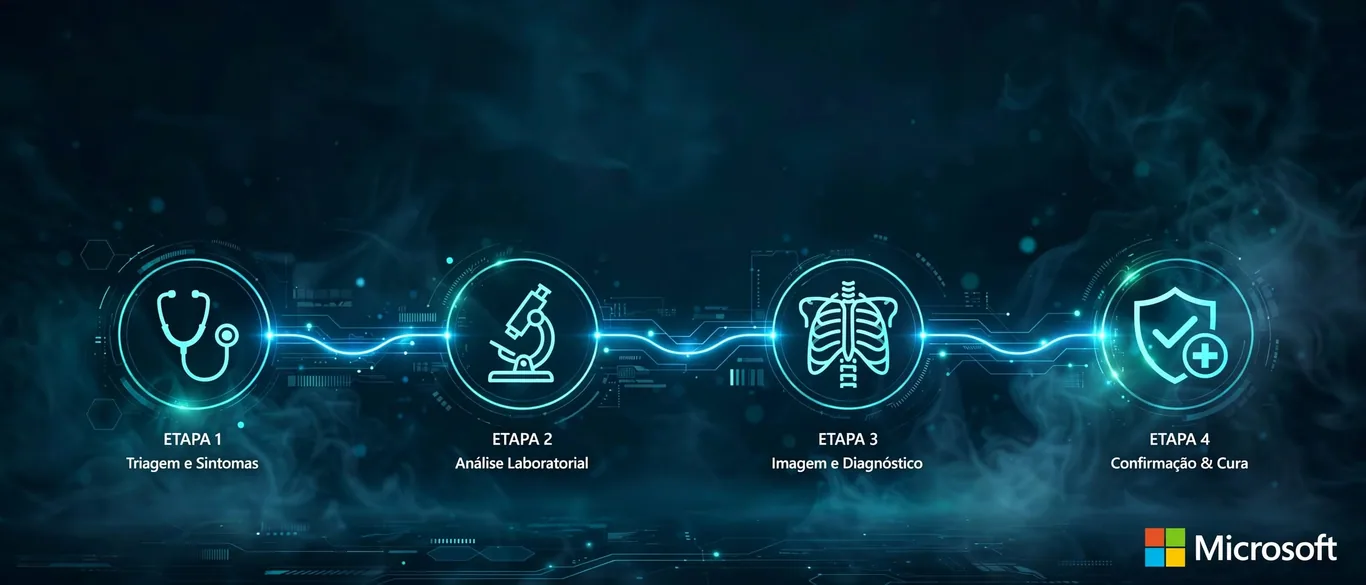
Standard medical AI benchmarks rely on rigid multiple-choice questions that fail to reflect messy real-world symptoms. According to Olhar Digital, Microsoft addressed this limitation by developing an orchestration tool that simulates a panel of medical specialists, investigating patient histories dynamically step by step.
How the Sequential Diagnostic Engine Works
Instead of processing all patient data simultaneously, the system evaluates incoming findings, revises working hypotheses, and requests targeted physical exams or lab tests as new information emerges. If initial data proves insufficient, the tool adjusts its investigative path, mirroring how human clinicians handle complex or rare medical cases.
How It Performs on Complex Cases
Researchers tested the technology across more than 300 unusual and difficult clinical cases. The orchestrator-based model outperformed general practitioners using books and internet references by a factor of two in terms of accuracy. Furthermore, the structured investigation process reduced overall diagnostic costs compared to traditional human-led pathways.
Passo a passo: como funciona na prática
Here is how the AI workflow operates during a clinical evaluation:
- Initial Intake: The orchestrator gathers initial patient history and current physical exam findings.
- Hypothesis Generation: Simulated specialist agents analyze the data and generate initial diagnostic theories.
- Iterative Testing: The system determines which specific lab tests or exams are necessary next.
- Review and Refinement: Based on test outcomes, hypotheses are updated, and further steps are requested if needed.
Veredito: quem deve (e quem não deve) usar
While the results in complex case studies are promising, the technology is still moving toward real-world hospital validation. A forthcoming trial at the Beth Israel Deaconess Medical Center in Boston will test the tool directly in emergency room waiting rooms. For healthcare systems, this signals a shift toward assistive triage tools that cut diagnostic blind spots, though clinical supervision remains non-negotiable.
Sources
- Microsoft cria IA que diagnostica doenças em etapas, como médicos — olhardigital.com.br
Frequently asked questions
- How does Microsoft's medical AI differ from traditional models?
- Unlike models tested on static multiple-choice questions, Microsoft's tool investigates patient cases sequentially, requesting tests and revising hypotheses iteratively.
- How accurate was the AI in tests?
- According to reports covered by Olhar Digital, the system achieved more than twice the accuracy of general practitioners in over 300 complex clinical cases.
- What is the next phase for the technology?
- The tool will be tested in emergency room waiting rooms at the Beth Israel Deaconess Medical Center in Boston to evaluate its effectiveness in practical triage.
Comments
0 commentsDeixe seu comentário
Be the first to comment.
Continue Reading

Can a $32M Open Model Beat Big Tech? Inside Ripple-65B
Ricursive launches open Ripple-65B coding model

WhatsApp Just Added AI Outpainting: How to Expand Photos Instantly
WhatsApp tests AI to expand photo backgrounds

Google's New AI Video Tool: A Pro Workflow for Cheap Clips
Google Omni 1.2 Flash cuts video costs