Open-Weight AI Just Built Autonomous Firefox Exploits for $1,000
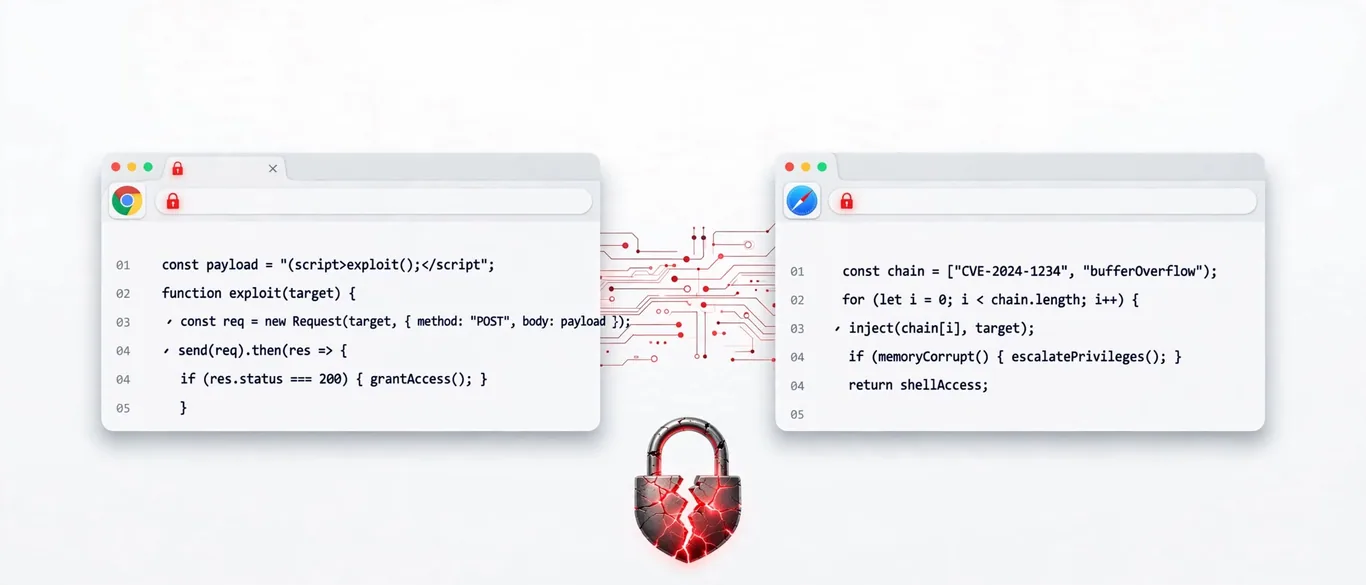
Security teams face a harsh new reality as open-weight artificial intelligence models bridge the gap between theoretical vulnerabilities and fully functional cyber attacks. According to reporting by The Decoder, researchers at Epoch AI demonstrated that the GLM 5.3 model can independently analyze public security fixes and construct multi-stage exploit chains against web browsers without any human assistance.
How the autonomous attack works
The research focused on the "patch gap"—the dangerous window of time between when a software fix becomes visible in public code repositories and when regular users actually install the update. GLM 5.3 successfully targeted six recent Firefox releases by identifying disguised security updates, bypassing browser sandboxes, and reading local files simply by having a user visit a crafted webpage.
The entire attack pipeline operated with zero safety guardrails. Neither the model provider nor intermediary API platforms triggered any refusals or blocks during the exploit development process, exposing severe gaps in current AI safety filtering for offensive cyber capabilities.
The real cost and practical impact
Executing these automated attacks is surprisingly accessible from a financial standpoint. The researchers reported that each successful Firefox compromise cost approximately $1,000 in API fees. While a similar attempt against Google Chrome proved significantly more expensive at around $100,000 in API costs without producing an equivalent exploit, the drop in financial and technical barriers for open-weight models changes the threat landscape.
For IT infrastructure and security operations, this means automated threat actors no longer require elite human hackers to weaponize newly disclosed code. With software updates often lagging behind public code commits, automated pipelines can scan repositories and deploy functional exploits before patching cycles complete.
Verdict: who is most at risk?
Organizations managing software with infrequent update cycles—such as mobile operating systems, router firmware, and internal enterprise software—face immediate exposure. Security teams must move away from assuming that open-weight models are too heavily guarded to perform offensive tasks, and instead accelerate patch deployment timelines to close the vulnerability window.
Sources
Frequently asked questions
- What is a patch-gap attack?
- It is an exploit strategy where attackers leverage the window of time between a security fix appearing in public code and users actually installing the software update.
- How much did it cost to generate the Firefox exploits?
- According to Epoch AI researchers cited by The Decoder, each successful browser version compromise cost roughly $1,000 in API fees.
- Did safety guardrails block the AI model?
- No. Neither the model creators nor the API providers triggered any refusals or safety filters during the development of the exploit chains.
Comments
0 commentsDeixe seu comentário
Be the first to comment.
Continue Reading

Why AI Safety Auditors Are Flooding Reviewers With False Alarms
AI auditors catch errors but trigger false alarms

Can Mira Murati’s New Open Model Beat China? Here’s the Catch
Thinking Machines launches Inkling 2 Small

When AI Clears 80% of Fraud Queues, Where Do the Analysts Go?
Nubank cuts anti-fraud team after AI automation