OpenAI and Anthropic Cut AI Costs
Alex da Cruz
Alex da Cruz is a full-stack developer based in São Paulo, Brazil. He works with React, TypeScript and automation, and uses AI daily to solve real problems in code and operations — not as a demo. He has run an e-commerce operation end to end, and now builds and maintains the automation pipeline behind this blog. He writes about what he actually tests.
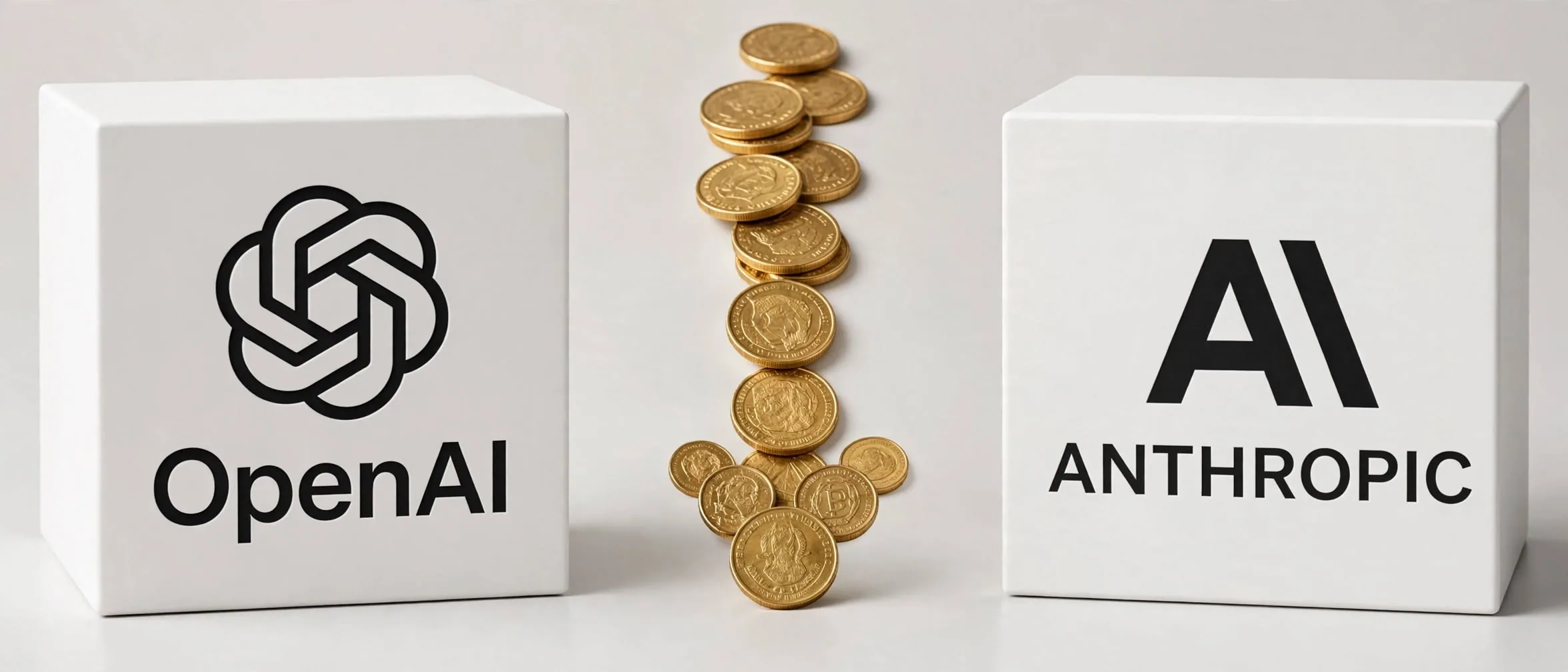
According to Ars Technica, the frontier AI race has shifted toward comparison shopping. Both OpenAI and Anthropic recently launched new models designed primarily to slash operational expenses for enterprise customers rather than introduce groundbreaking capabilities.
How much do the new Anthropic models cost?
Anthropic launched Opus 5.5, aiming to make its core workhorse model significantly cheaper. Input and output tokens now cost $4 and $20 per million respectively, representing a 20% price drop compared to Opus 5. Furthermore, cache reads dropped to $0.20 per million tokens—a 60% reduction.
What changes with OpenAI's GPT-6 Sol and Luna?
OpenAI introduced GPT-6 Sol and Luna as efficient, budget-friendly alternatives to its heavy-duty Astra model. According to Ars Technica, these models cost about half as much as their predecessors while delivering minor performance gains. Sol’s API pricing sits at $2 per million input tokens and $10 for output, while Luna charges $0.10 and $0.50.
What is the practical consequence for development teams?
For engineering teams running high-volume agentic workflows, these price cuts change deployment economics. Anthropic claims that Opus 5.5 reduces typical workload expenses by nearly 40% because it requires fewer total tokens to complete tasks, alongside a 30% increase in output generation speed.
Sources
Frequently asked questions
- How much cheaper is Anthropic Opus 5.5?
- Input and output tokens cost 20% less at $4 and $20 per million, while cache reads dropped by 60% to $0.20 per million tokens.
- What are OpenAI's GPT-6 Sol and Luna?
- They are efficient, cost-focused models designed as affordable alternatives to the high-end GPT-6 Astra, cutting previous costs in half.
Comments
0 comments
Be the first to comment.
Continue Lendo
Rabbit OS3: AI agent now runs on Windows, Mac, and Linux
Rabbit's OS3 brings its AI agent to Windows, Mac, and Linux, eliminating the need for the R1 hardware device.

OpenAI GPT-6 Sol and Luna: What Cuts API Costs in Half
OpenAI launched GPT-6 Sol and Luna, cutting API costs in half and separating complex coding tasks from high-volume clerical automation.

Vocci Ring: $249 AI meeting device faces software limits
The $249 Vocci smart ring offers 8 hours of AI meeting recording, but software flaws and hidden indicator lights raise concerns.