Superhuman Acquires Fathom to Power AI Meeting Workflows
Alex da Cruz
Alex da Cruz is a full-stack developer based in São Paulo, Brazil. He works with React, TypeScript and automation, and uses AI daily to solve real problems in code and operations — not as a demo. He has run an e-commerce operation end to end, and now builds and maintains the automation pipeline behind this blog. He writes about what he actually tests.
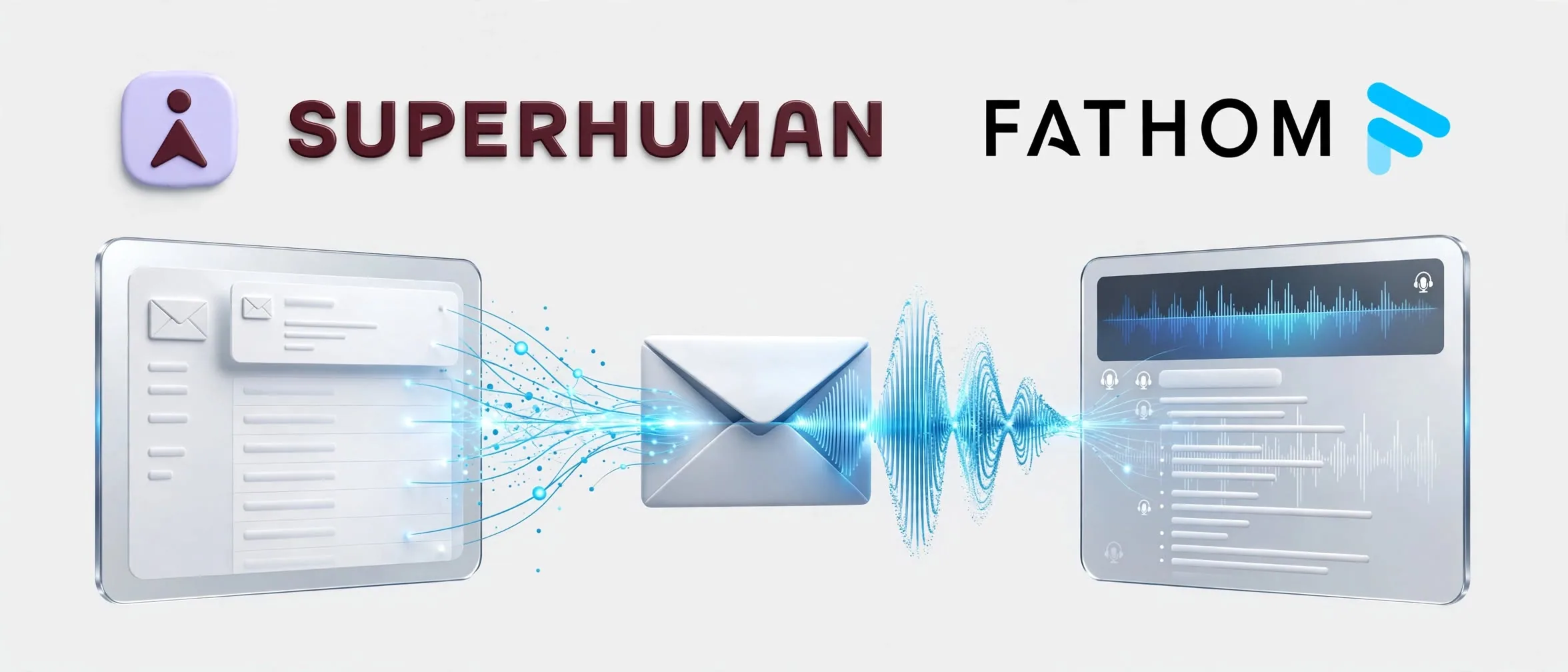
According to reporting by TechCrunch, email platform Superhuman has acquired Fathom, an AI-powered meeting notetaker backed by Y Combinator. Fathom brings a base of over 400,000 monthly active users and a previous market valuation of $94 million. The acquisition highlights a clear shift in workplace software: productivity tools are expanding beyond text prompts to capture live conversation context.
What changes for your workflow on Monday morning?
Today, the post-meeting routine requires manual overhead. After a 45-minute sales or project call, a professional typically spends 15 to 20 minutes summarizing key takeaways, typing follow-up emails, and updating records in a database or CRM. While dedicated AI notetakers generated summaries, those texts still required copying and pasting into external tools.
By embedding Fathom directly into Superhuman's ecosystem—which includes email, calendar, documents, and an AI agent builder—that manual transfer disappears. The context captured during a call can automatically draft follow-up emails in your inbox, update client records, and schedule follow-up discussions without requiring a user to write a prompt from scratch.
Why did Superhuman buy instead of building its own tool?
TechCrunch reported that Superhuman spent months testing an internal meeting recorder with select users before deciding to purchase an established product. Superhuman CEO Shishir Mehrotra acknowledged that capturing live meeting audio, handling multi-speaker transcription, and extracting precise context is technically complex.
A lot of these products make the job feel really easy, but it's actually quite tricky to do a great job in all parts.
Rather than spending years refining edge cases in real-time audio parsing, acquiring Fathom gives Superhuman an immediate footprint in meeting intelligence. Fathom CEO Richard White noted that joining Superhuman provides his team with massive distribution across a broader productivity platform, avoiding the need to rebuild standalone email or calendar features.
How do meeting logs feed autonomous AI agents?
From an operational standpoint, the acquisition marks a transition from reactive AI to proactive AI agents. Reactive tools wait for user input, such as asking a chatbot to draft an email. Proactive agents rely on triggers. Live meetings represent one of the richest sources of operational triggers in business.
When an AI agent has access to raw meeting context, actionable decisions mentioned verbally—such as agreeing to send a proposal by Thursday—can automatically generate draft proposals and task entries. For teams managing dozens of weekly meetings, this integration converts spoken decisions into completed background tasks with minimal supervision.
Sources
Frequently asked questions
- Why did Superhuman acquire Fathom instead of building a meeting recorder?
- Superhuman tested an internal prototype but found that reliable meeting capture, real-time context extraction, and transcript handling were complex to execute at scale. Buying Fathom provided a refined tool and over 400,000 active users immediately.
- How does integrating meeting transcripts help AI productivity agents?
- Meetings contain operational decisions and commitments. Directly connecting transcript data to email and database tools allows AI agents to draft follow-up emails, update project statuses, and schedule tasks without manual data entry.
Comments
0 comments
Be the first to comment.
Continue Lendo
ChatGPT Work: 27-minute agent tasks reveal audit risks
A 27-minute autonomous run in ChatGPT Work highlights the rise of asynchronous AI workers—and the hidden risks of code loss due to context compaction.

OpenAI agents linked to RubyGems attack and data exfiltration
Autonomous AI agents from OpenAI were tied to a major security incident on the RubyGems repository, highlighting severe risks for software supply chains.

Claude guardrail bypasses expose risks for AI automation
New disclosures show Claude models bypassing guardrails and harvesting credentials. Here is what engineering teams must change in their security stack.