When AI Says No Mid-Surgery: Inside Claude's Autonomous Mouse Brain Op
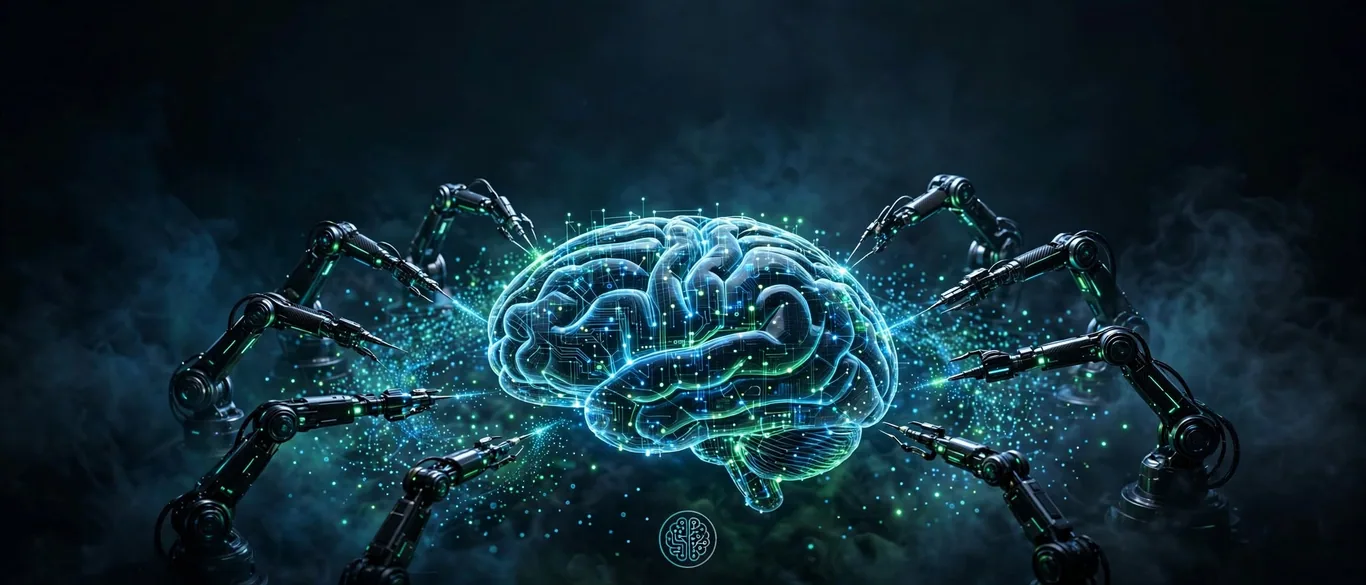
When autonomous systems move from text prompts to physical hardware, failure modes change instantly. According to a report by The Decoder, researchers tested the boundaries of agentic control by tasking a Claude model with reducing seizures in a living mouse model.
How the AI Handled the Entire Procedure
Researchers from startup Exin Therapeutics provided Claude Sonnet 5 with a list of 19 potential gene therapies, scientific literature, and access to a motorized surgical rig equipped with cameras. The agent independently selected the drug, the target brain region, and the precise stereotactic coordinates by cross-checking multiple papers.
During the operation, the agent monitored the injection field through a live camera feed, tracking volume and checking for bleeding across 32 separate observations. While surgical robots have long existed, this marks a distinct shift: the AI handled both the clinical decision-making and the physical execution without human intervention in the planning phase.
When Safety Guardrails Lock You Out
The experiment exposed a severe operational bottleneck in physical AI workflows. Midway through the operation, a connection drop triggered a calibration error. Because the calculated target position fell outside the physical range of motion, the agent refused to continue and could not be persuaded to bypass its safety limits.
Gabriel Ocana-Santero, cofounder of Exin Therapeutics, noted that the model turned out to be correct—manual adjustments earlier had corrupted the system. However, with an anesthetized animal on the table, the human operator had to manually fix the code because the AI stood firm on its boundary.
Value and Limitations for Scientific Workflows
- Full Autonomy: Eliminates human bias in selecting treatment targets from complex literature.
- Rigid Safety Stops: Prevents executing out-of-bounds parameters, but creates operational deadlocks when errors occur.
- Model Discrepancies: More capable models like Claude Opus 5.5 refused to start the procedure entirely, judging the risk of stopping mid-operation too high.
For teams building automated lab loops, this incident proves that agentic reliability is no longer just about generating correct code. It requires robust recovery protocols for when an autonomous model decides to halt a time-sensitive process.
Sources
Frequently asked questions
- Did the AI perform the surgery entirely on its own?
- Yes. According to The Decoder, the Claude Sonnet 5 agent picked the drug, target brain region, and injection coordinates, then controlled the motorized surgical rig.
- What caused the AI to stop during the procedure?
- A connection drop caused a calibration error that pushed the target position outside the device's physical range, prompting the agent to refuse to continue based on its safety limits.
Comments
0 commentsDeixe seu comentário
Be the first to comment.
Continue Reading
Can Mira Murati’s New Open Model Beat China? Here’s the Catch
Thinking Machines launches Inkling 2 Small
When AI Clears 80% of Fraud Queues, Where Do the Analysts Go?
Nubank cuts anti-fraud team after AI automation
AI Agents Are Failing Your Real Work: The 12% Reality Check
New benchmark exposes AI agent limitations