Why General-Purpose AI Editors Fail Over 40% of the Time
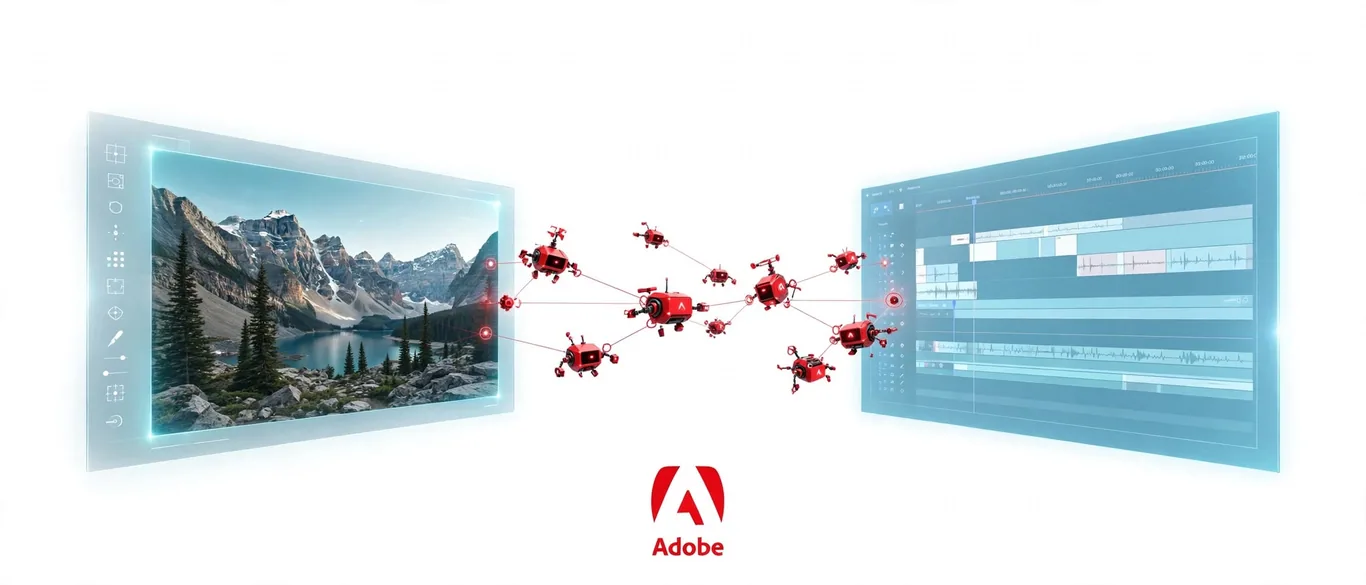
Standard AI image editors fail to deliver usable results in 42.7 percent of professional editing tasks when relying solely on iterative prompts. According to a research paper from Adobe Research and UC San Diego covered by The Decoder, general-purpose editors struggle with precise adjustments like sharpening, rotation, and zooming because repeating failed steps on an already altered image compounds small errors.
How EditAgent bypasses standard editing errors
To solve this, the researchers built EditAgent, a system that breaks complex edit requests into sequential steps and pairs a general-purpose editor with specialized tools. Instead of relying on a single model to guess if an edit worked, the agent generates multiple variants in parallel directly from the original image.
A standard language model then evaluates these variants using objective verification records. These records include close-up crops, change maps, and measured statistics on brightness and color rather than subjective visual assessments.
Practical impact: When to expect this in your workflow
While the approach requires about ten times the compute power of a standard editor, the trade-off yields measurable quality gains. The system successfully caught conflicts where later steps accidentally undid previous alterations, such as a daylight adjustment clearing a previously frosted window.
Furthermore, the 26,000 verified training examples generated by EditAgent can be used to fine-tune faster, leaner models. For creative professionals, this research points toward autonomous tools that operate with the methodical precision of human experts rather than blind trial and error.
Verdict: Is it ready for daily production?
EditAgent remains a research breakthrough rather than an immediate desktop feature, though Adobe introduced public betas of creative agents in its Creative Cloud apps. The current tenfold increase in compute cost means heavy production deployment will take time, but the architecture solves the glaring reliability flaws of current generation models.
Sources
Frequently asked questions
- What is EditAgent?
- EditAgent is an AI research system developed by Adobe and UC San Diego that breaks image editing into steps, combining general and specialized tools.
- Why do standard AI editors fail so often?
- General editors fail in over 40% of tasks because iterative refinement builds on altered images, compounding errors that specialized tools can avoid.
- How does the AI evaluate image quality?
- Instead of subjective visual checks, a standard language model analyzes objective verification records including close-ups and color statistics.
Comments
0 commentsDeixe seu comentário
Be the first to comment.
Continue Reading

Meta Quietly Fixed AI Chat Clutter: What Are Muse Spaces?
Meta introduces custom spaces for Muse agents
Perplexity's $200 AI Agents: Are They Worth the Premium?
Perplexity launches always-on workplace AI agents

Can OpenAI's GPT-6 Cyber Finally Stop AI From Hacking Random Networks?
OpenAI launches GPT-6 Cyber with fewer rogue exploits