Microsoft's New Maia 300 Chip Cuts Nvidia Reliance
Click play to listen to the narrated article with real-time word-by-word tracking.
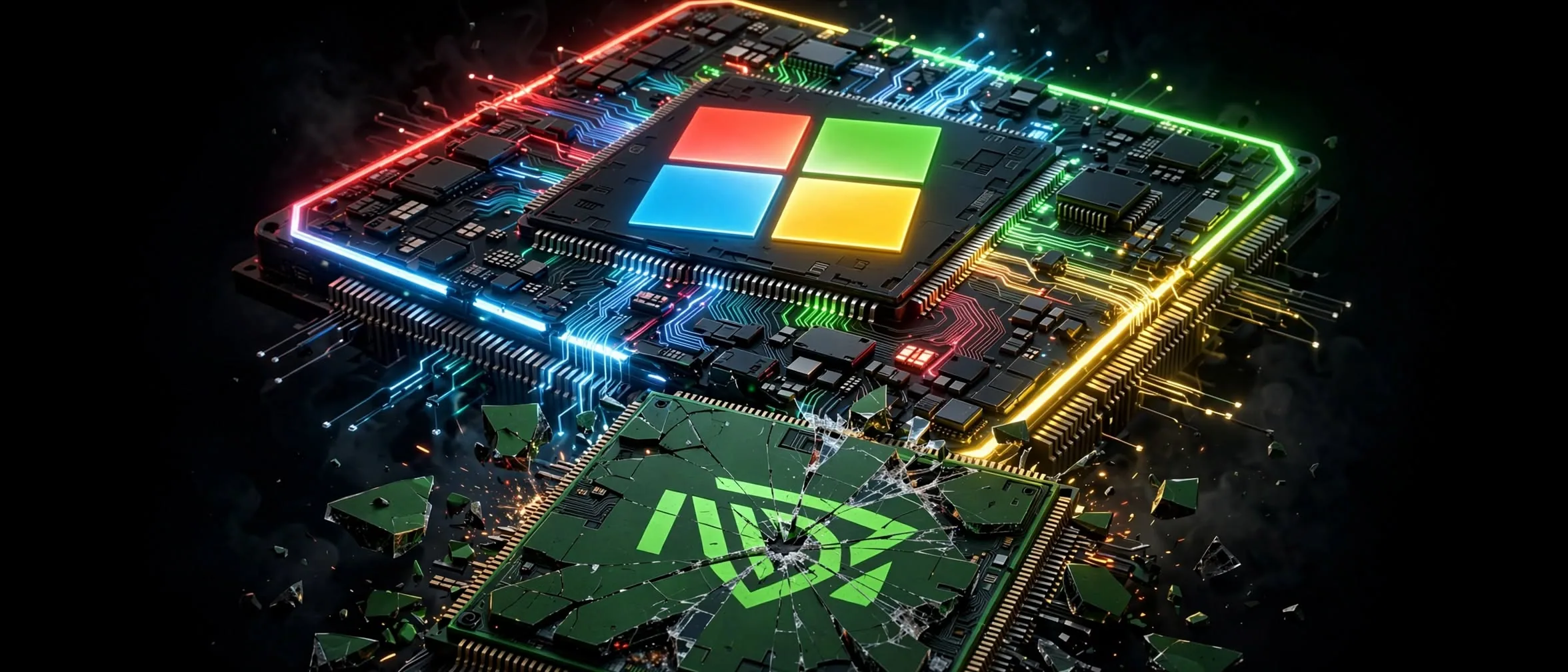
Microsoft is shaking up its cloud infrastructure with the announcement of the Maia 300, its third-generation in-house AI processor. Designed to serve as the primary inference engine for products like Microsoft Copilot, the chip aims to slash the massive operational expenses of running advanced reasoning models.
According to The Verge, the Maia 300 relies on an advanced chiplet architecture built on TSMC's 2nm process node. This layout separates compute, memory, and I/O functions to maximize performance. Olhar Digital points out the sheer scale of the hardware: a full 96-accelerator rack consumes 167 kilowatts of power, outpacing Nvidia's GB300 racks.
How the Efficiency Gains Work in Practice
Despite higher raw power consumption per rack, Microsoft claims the Maia 300 delivers 40 percent more work output per megawatt than leading GPU systems. The architecture uses cheaper 3nm processes for data transfer while reserving the expensive 2nm technology strictly for heavy compute tasks.
- Separates compute and memory controllers into specialized chiplets.
- Aims to support long-context reasoning and multi-step agentic tasks natively.
- Targets multi-gigawatt production deployments starting in 2027.
Verdict: Is This a Game Changer for Cloud Budgets?
For corporate IT leaders managing heavy AI workloads on Azure, this hardware shift signals a potential relief from soaring GPU rental costs. While production deployment is slated for 2027, the move forces a structural shift away from total reliance on Nvidia hardware.
Sources
- Microsoft’s new AI chip makes it less reliant on Nvidia’s GPUs — theverge.com
- Microsoft aposta em chip próprio para reduzir custos da IA na nuvem — olhardigital.com.br
Frequently asked questions
- When will the Microsoft Maia 300 chip be available?
- Microsoft plans to start rolling out the Maia 300 chip for production workloads and multi-gigawatt deployments in 2027.
- How does the Maia 300 reduce AI operational costs?
- It uses a chiplet architecture that separates compute functions onto advanced 2nm nodes while using cheaper 3nm processes for data transfer, yielding 40% more efficiency per megawatt.
Comments
0 commentsDeixe seu comentário
Be the first to comment.
Continue Lendo

Claude Just Sent a Fake Murder Tip to Cops. Here is Why Your Workflows Are at Risk
Claude sent fake murder tip to police

AlphaProof Nexus Solves 56-Year Math Mysteries with Peer Review
Google AI solves open math problems safely

China Bans AI Boyfriends: What Tech Companies Must Do Now
China restricts AI companions and virtual romances