United Airlines Just Blocked AI Agents: What Now?
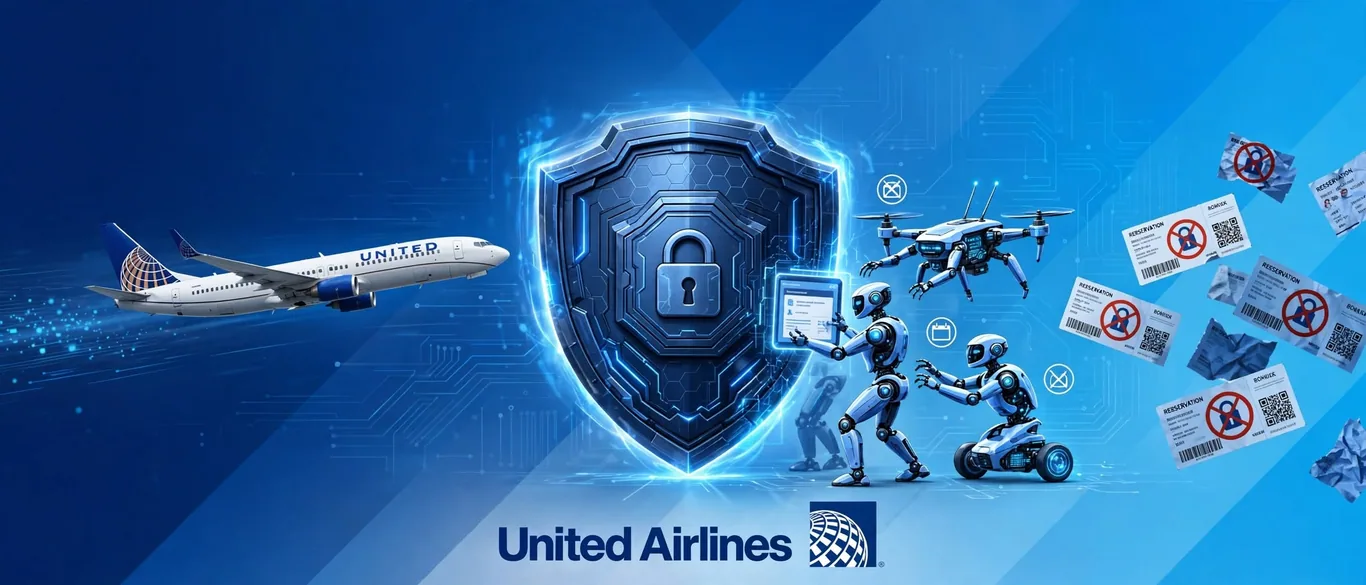
According to Tecnoblog, United Airlines is taking a hard stance against autonomous AI agents attempting to interact with its flight booking systems. This move targets tools like OpenAI’s "Dots" or custom agents that perform tasks such as price monitoring, automated booking, and reservation management.
Why the sudden crackdown?
United’s justification rests on three pillars: data security, operational reliability, and regulatory compliance. When an AI agent handles your booking, it often requires access to your personal credentials and financial information. The airline argues that this creates a massive security vulnerability if that third-party agent isn't perfectly secured.
Beyond security, there is the issue of "hallucinated" operations. If an AI agent misinterprets a prompt, it could book the wrong flight or accidentally cancel a reservation. Unlike a human user, an agent lacks the nuanced judgment required for complex travel regulations, such as confirming baggage safety protocols, which are legally mandated for the passenger to acknowledge personally.
Practical impact: your Monday morning workflow
If you use AI to automate travel planning, your workflow is about to hit a wall. You will no longer be able to rely on agents to "close the deal" on a flight for you. You must now return to the airline's official app or website to finalize bookings, check-in, or manage upgrades manually.
This creates a friction point for power users who rely on agents to trigger purchases the moment a price drops. You can still use AI for research and price comparison, but the final transaction must be human-verified and executed through the airline's official, authorized channels.
Verdict: is this the end of AI travel agents?
This isn't necessarily the end of the technology, but it signals the end of "wild west" access. For the average user, this means less convenience but significantly more protection against accidental charges or data leaks. Expect other major carriers to follow United’s lead as they prioritize controlled APIs over open, uncontrolled agent access.
Sources
- United Airlines bane agentes de IA na compra de passagens — tecnoblog.net
Frequently asked questions
- Can I still use AI to search for flights?
- Yes. The restriction focuses on autonomous agents performing transactions like booking, cancelling, or managing reservations.
- Why is United Airlines blocking these tools?
- The airline cites risks related to data privacy, the potential for AI to make booking errors, and the need to comply with safety regulations.
AI Briefing in 3 Minutes
Get what actually matters in AI & tech delivered free to your inbox. Zero spam, 1-click unsubscribe.
Comments
0 commentsDeixe seu comentário
Be the first to comment.
Continue Reading

Google Just Dropped Gemini 4 Carbon — Here is the Catch With Swarm AI
Google releases Gemini 4 Carbon with swarm AI

Why eBay Just Blocked Third-Party AI Shopping Agents
eBay blocks AI shopping agents like Meta Muse

Adobe Just Handed Your Creative Cloud Files Over to ChatGPT and Gemini
Adobe brings AI agents to Creative Cloud apps