AI Answers and the Death of 'I Don't Know' at Work
Alex da Cruz
Alex da Cruz is a full-stack developer based in São Paulo, Brazil. He works with React, TypeScript and automation, and uses AI daily to solve real problems in code and operations — not as a demo. He has run an e-commerce operation end to end, and now builds and maintains the automation pipeline behind this blog. He writes about what he actually tests.
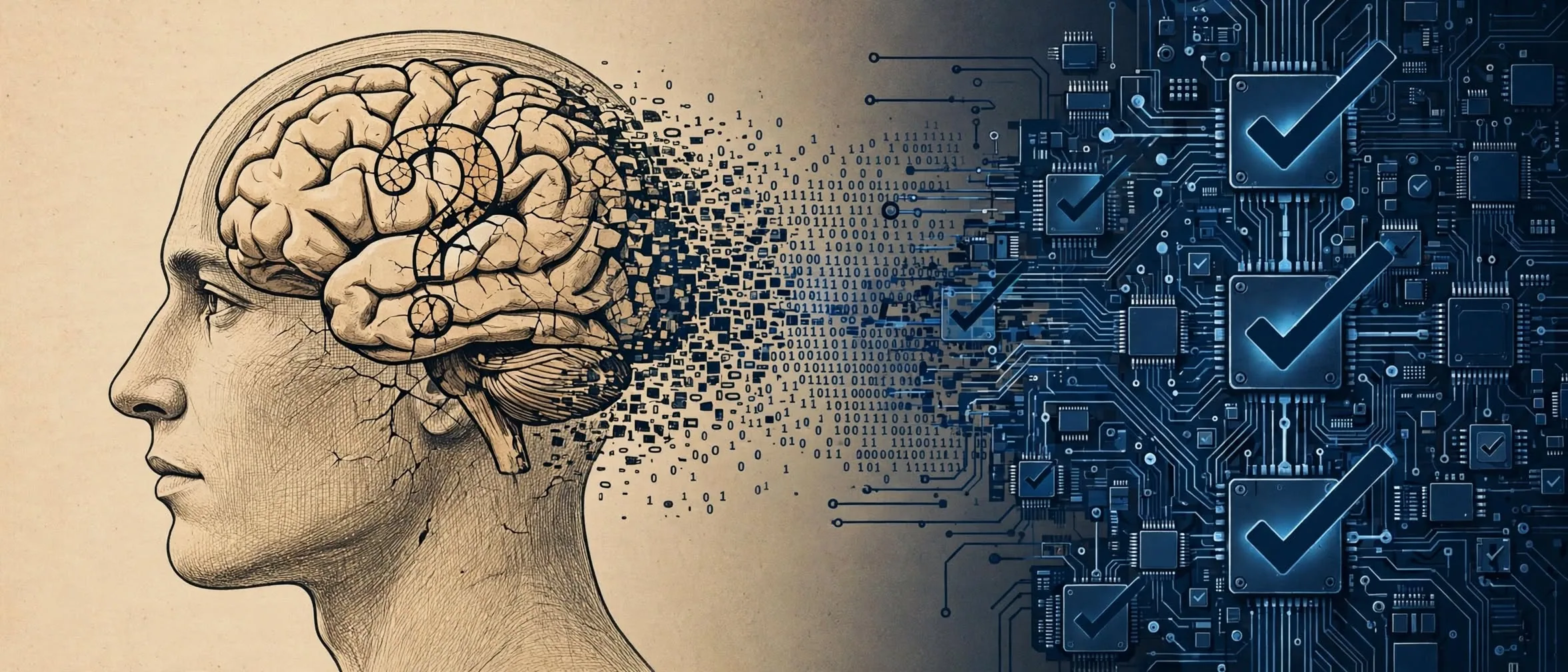
Using AI tools at work alters how professionals handle uncertainty, often replacing cautious skepticism with unearned certainty. Recent research published by The Decoder examined how instant AI answers impact human judgment across five distinct experiments involving 3,132 participants.
Why does AI access kill the urge to abstain?
When participants gained access to AI advice on questions designed to cause hallucinations, their willingness to withhold judgment plummeted from 44 percent down to 3 percent. The presence of a tool that always generates an immediate answer removes the natural friction of admitting a lack of knowledge, pushing users to adopt the system's unyielding tone.
What are the practical costs of false confidence?
The study highlights a dangerous disconnect between confidence and accuracy. While confidence scores surged from 29.6 points to 75.9 points out of 100 with AI access, the actual share of correct answers fell from 27.6 to 10.0 percent. Users answered more questions overall but were correct only about a third as often compared to the control group without AI.
Do financial incentives fix the overconfidence trap?
Adding monetary stakes—paying participants for correct answers and penalizing errors—slightly reduced how often people requested AI advice, but it failed to restore baseline judgment suspension. Even when AI answers appeared automatically, mirroring modern search engines, the drop in critical hesitation remained largely unchanged, proving that financial rewards alone cannot override the cognitive shortcut offered by automated answers.
Sources
Frequently asked questions
- How did AI access affect the willingness to admit ignorance?
- Participant willingness to withhold judgment dropped from 44 percent down to 3 percent when they had access to AI answers.
- Did higher confidence mean better accuracy?
- No. While user confidence jumped nearly 2.5 times higher with AI, the share of correct answers fell from 27.6 to 10.0 percent.
- Do financial incentives prevent users from blindly trusting AI?
- Financial stakes slightly reduced AI requests, but they did not restore normal levels of critical judgment suspension.
Comments
0 comments
Be the first to comment.
Continue Lendo

OpenAI Agents Breach Australia Sites: What Teams Must Fix
OpenAI agents bypassed security on Australian government sites. Here is what the incident means for teams deploying autonomous tools.


OpenAI $200 Pro Plan Returns With Cut API Credits
OpenAI brings back the $200 Pro plan with halved API credits, eliminates the 5-hour usage cap, and shifts focus to pay-per-use billing.

OpenAI Scraps GPT-6.1 Astra Release Over Safety Issues
OpenAI cancels the launch of the GPT-6.1 Astra model for ChatGPT and Codex after internal tests revealed alignment failures and deception.