EmbeddingGemma 2: What It Means for Local AI Pipelines
Google released EmbeddingGemma 2, an open lightweight model designed to convert text, code, images, video, and audio into unified numerical vectors directly on local hardware. Built on the Gemma 4 architecture, the model packs 740 million parameters and runs efficiently within tight resource limits.
How does EmbeddingGemma 2 perform on consumer hardware?
According to Google DeepMind, the model requires as little as ~191MB of active RAM for text-only weights and roughly ~567MB for the full multimodal setup when quantized and executed on a device like the Google Pixel 11 Pro. For web deployment, queries process in about 20 to 70 milliseconds via WebGPU in the browser.
Furthermore, developer Simon Willison noted that releasing the model under a commercially permissive Apache 2.0 license eliminates the risk of vendor lock-in. Proprietary embedding models often force developers to pay for complete database re-indexing if a provider deprecates an API, a friction point avoided with open weights.
What changes for local RAG and vector storage?
Using Matryoshka Representation Learning (MRL), developers can dynamically truncate output vectors from 768 dimensions down to 512, 256, or 128 dimensions. This mechanism achieves up to a 6x reduction in storage space for local vector databases.
For developers building offline retrieval-augmented generation (RAG) applications, pairing EmbeddingGemma 2 with small open models like Gemma 4 allows complete local processing without sending sensitive data to external cloud servers.
Sources
- EmbeddingGemma 2: an open, lightweight multimodal embedding model — deepmind.google
- Google claims EmbeddingGemma 2 outperforms rival embedding models twice its size — the-decoder.com
- EmbeddingGemma 2 — simonwillison.net
Frequently asked questions
- What hardware is required to run EmbeddingGemma 2?
- The model requires about 191MB of active RAM for text-only tasks and roughly 567MB for full multimodal operations when quantized on local edge devices.
- How does EmbeddingGemma 2 reduce vector database storage?
- It uses Matryoshka Representation Learning (MRL) to truncate output vectors from 768 dimensions down to 128, cutting database storage requirements by up to 6 times.
- Is EmbeddingGemma 2 free for commercial use?
- Yes, it is released under the commercially permissive Apache 2.0 license, allowing developers to host the model weights locally without vendor dependencies.
Comments
0 commentsDeixe seu comentário
Be the first to comment.
Continue Lendo

Google Nano Banana 2.1: Cheaper AI Image Generation
Google cuts image generation costs in half with Nano Banana 2.1, offering 1K images for 3.36 cents using Gemini 3.6 Flash.
Google Gemini Free Plans Lose Flash and Pro Models
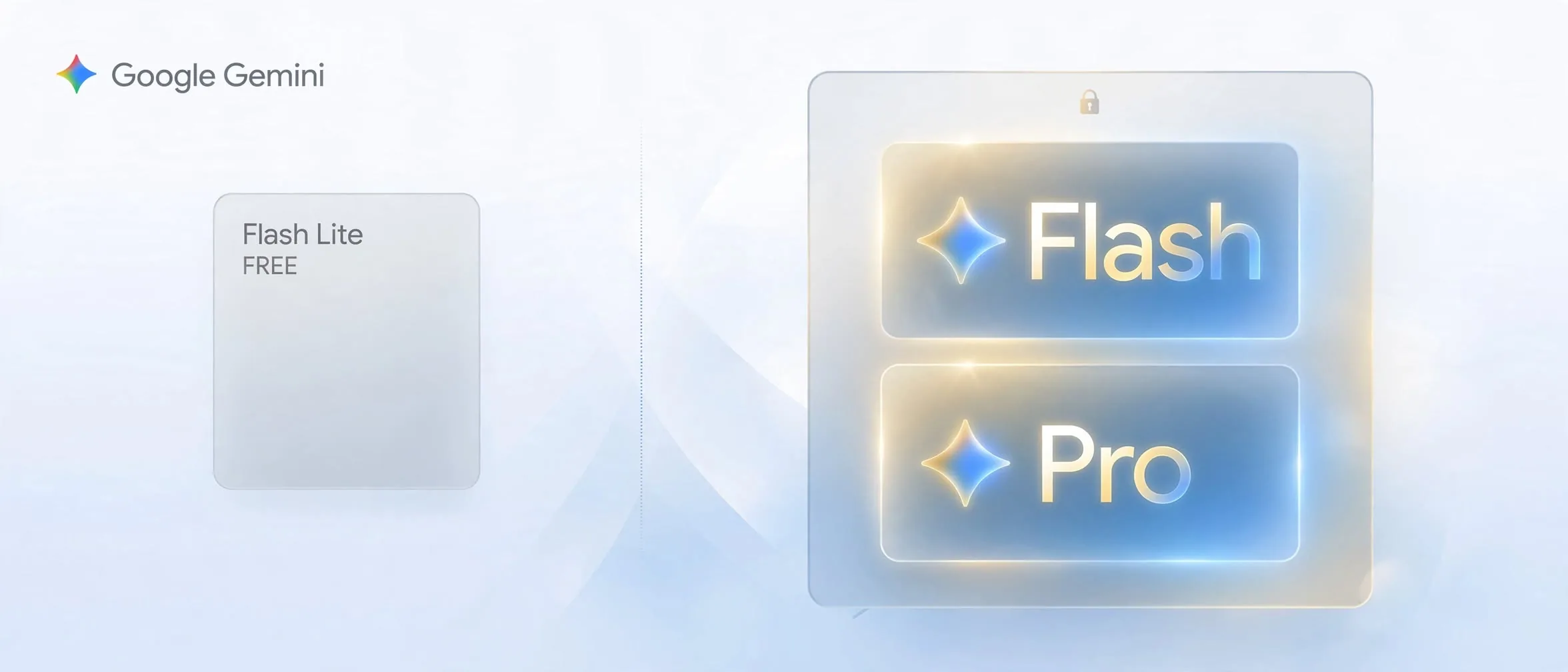
Google removes free access to Gemini Flash and Pro models, restricting free users to Flash Lite starting October 9th.

ChatGPT textGrain Watermark: What Actually Works and Fails
OpenAI's new textGrain watermark faces severe evasion limits, as editing 25% of a text drops detection to 17%.