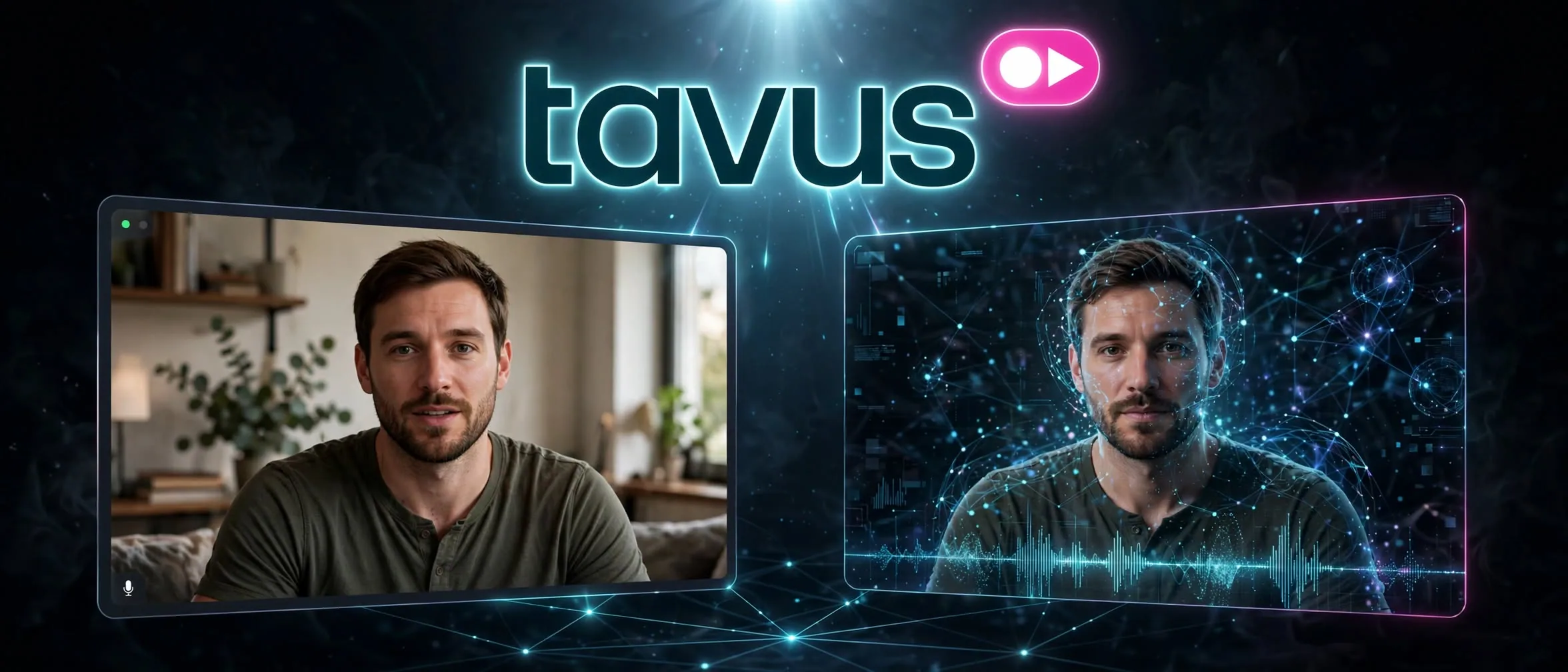
Tavus Griffin: AI Video Avatars Fool 48% in Tests
Alex da Cruz
Alex da Cruz is a full-stack developer based in São Paulo, Brazil. He works with React, TypeScript and automation, and uses AI daily to solve real problems in code and operations — not as a demo. He has run an e-commerce operation end to end, and now builds and maintains the automation pipeline behind this blog. He writes about what he actually tests.
Tavus introduced Griffin, a real-time conversational video model that processes facial expressions, tone, and gestures simultaneously. According to data published by the startup, 48% of test subjects believed they were talking to a real human after a one-minute call.
How does Griffin compare to previous AI video tools?
Older generative video systems topped out at a 2% success rate in fooling participants. In independent Nvidia tests measuring conversational naturalness on a scale, Griffin scored 3.83 points, coming close to the 3.92 average of actual human participants. Previous top AI models stalled at 2.80.
What does this mean for operations on Monday morning?
This leap in responsiveness shifts video avatars from static marketing gimmicks to functional operational tools. Companies can deploy the current research preview, Griffin-Lite, for high-volume scenarios like technical support, language tutoring, or practicing difficult HR conversations without hiring actors.
Sources
Frequently asked questions
- What is Tavus Griffin?
- Griffin is a real-time conversational video model developed by Tavus designed to process facial expressions, gestures, and speech during live video calls.
- How realistic is the Griffin AI avatar?
- In company tests, 48% of participants mistook the avatar for a real person during a one-minute conversation, compared to a maximum of 2% in older systems.
Comments
0 comments
Be the first to comment.
Continue Lendo

ChatGPT Virtual Try-On: What Changes for Retail
ChatGPT now lets users virtually try on clothes using the new Images 2.5 model, changing how e-commerce handles visual discovery.

Google Guided Vision: real-time AI fine print reading
Google launched Guided Vision for Gemini Live, allowing Android users to read fine print and analyze objects using real-time audio descriptions.

Ideogram 4.5: Localized Image Editing at 2K Resolution
Ideogram 4.5 delivers localized image editing and native 2K resolution starting at 0.8 cents per image, cutting out full regenerations.