Claude Science Built the First Complete Ultraviolet Map of the Sky
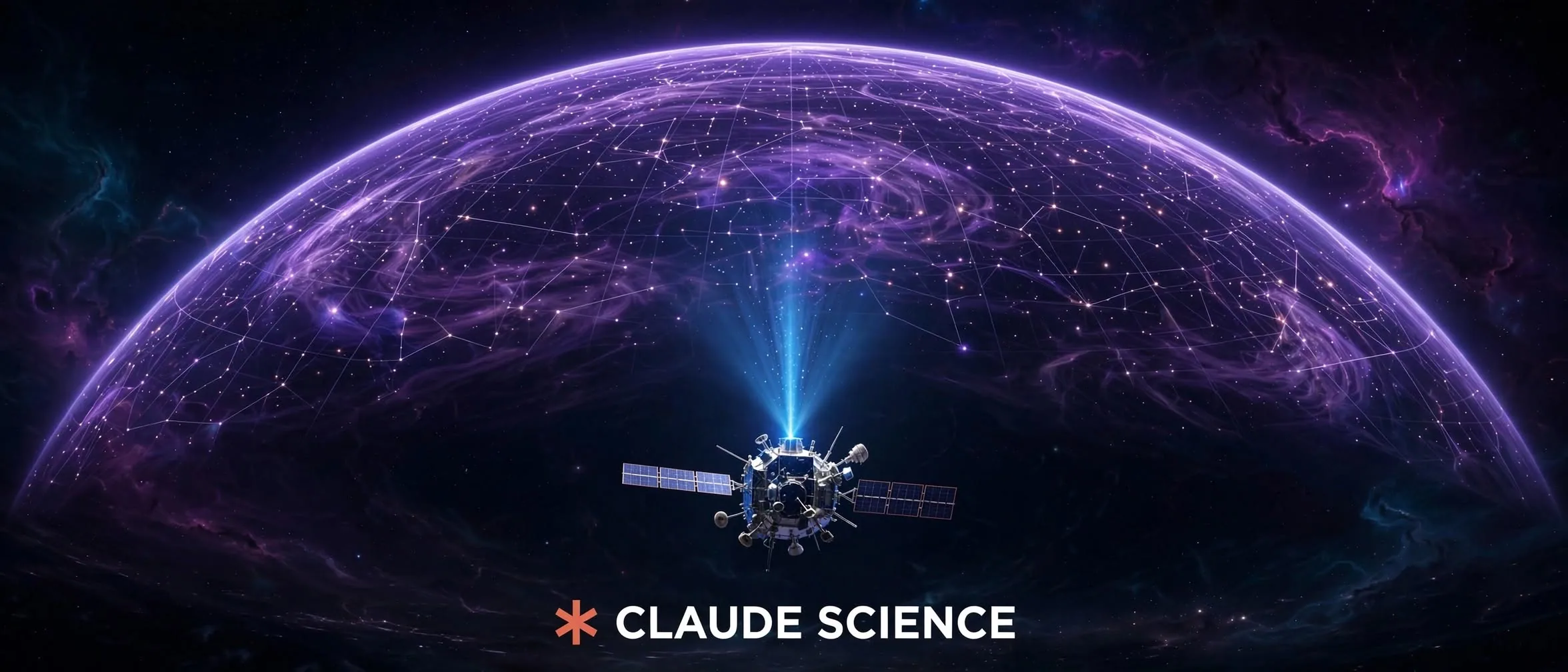
Astrophysicist Brice Ménard from Johns Hopkins University utilized Anthropic's Claude Science to produce the first complete ultraviolet map of the night sky, according to The Decoder. Because the ozone layer blocks ultraviolet light, previous missions like NASA's GALEX only covered two-thirds of the sky while skipping essential regions.
How the AI agents processed the sky data
Claude Science coordinated a team of autonomous AI agents to handle the heavy lifting. These agents downloaded raw datasets from multiple space missions, calibrated the stellar information, and merged the files into a unified format.
To solve missing data gaps, the system used inpainting, a technique where machine learning models reconstruct missing pixels based on surrounding patterns. Tests revealed that the model's predictions averaged about a ten percent deviation from actual physical measurements.
How to apply data agents to technical research
If you process large technical datasets, you can replicate this workflow by breaking complex tasks into modular agent steps:
- Data Collection: Deploy specialized scripts or agents to pull raw files from public repositories.
- Normalization: Use language models to write strict data-cleaning pipelines for inconsistent formats.
- Inpainting: Train or prompt models to estimate missing metrics, validating results against a control sample.
Is this workflow ready for your daily routine?
While this project highlights advanced scientific capabilities, the ten percent deviation means AI-generated gaps require strict human validation. It replaces weeks of tedious data wrangling, but domain experts must still review the final outputs before production use.
Sources
Frequently asked questions
- How accurate was the AI ultraviolet sky map?
- The predictions averaged about a ten percent deviation when compared against actual physical measurements.
- What technology did Claude Science use to fill missing gaps?
- The system used inpainting, allowing the model to learn from existing data and reconstruct missing areas.
Comments
0 commentsDeixe seu comentário
Be the first to comment.
Continue Lendo
Even Anthropic Had to Admit: Guardrails Cannot Catch Everything
Anthropic releases free scans after severe chat guardrail leaks.
OpenAI Math Proofs: Risks to Crypto Security and Research
OpenAI's massive release of AI-generated math proofs triggers academic backlash and sparks urgent security debates in crypto.

AWS Bedrock AgentCore flaw let single prompt hijack agents
A security flaw in AWS Bedrock AgentCore allowed a single prompt to steal credentials and hijack all agents in an account.