OpenAI Math Proofs: Risks to Crypto Security and Research
OpenAI recently flooded the scientific community with 722 AI-generated math manuscripts, testing models on roughly 4,000 complex problems at an average cost of three hours of compute per problem. While outlets like TechCrunch and The Decoder reported high-profile claims involving the Navier-Stokes and quasi-Riemann problems, the release triggered immediate backlash. Elite researchers, including Fields Medalist Terence Tao, criticized the unverified mass publishing, leading the Association for Human Mathematics to call for a boycott.
How the AI Math Proofs Work
The system generates a natural language explanation and attempts to translate it into Lean, a programming language designed to verify proofs as code. However, studies highlighted translation discrepancies and sign errors that forced OpenAI to retract papers immediately. Because only 42% of the proofs underwent strict formalization and chain-of-thought releases were rare, the burden of reviewing tens of thousands of pages falls entirely on human experts without compensation.
Veredito: What It Means for Your Routine
For everyday developers and finance professionals, the real danger isn't academic friction—it's infrastructure vulnerability. Ethereum researchers like Justin Drake are urging the crypto industry to prepare a bunker mode, warning that advanced AI math capabilities could eventually probe weaknesses in cryptographic signatures. While no active exploit has broken standard encryption yet, teams handling digital assets must audit protocols now to prevent sudden vulnerabilities.
FAQ
- Did OpenAI solve the Millennium Problems? No, but the models made partial progress on several complex open problems.
- Why are mathematicians upset? The proofs lack human context, bypassing traditional peer review and dumping verification work onto researchers.
Sources
- OpenAI’s math solutions aren’t meeting the field’s standards yet — techcrunch.com
- Some mathematicians call for OpenAI boycott after AI-generated proofs flood their field — the-decoder.com
- AI math breakthroughs have Ethereum researchers debating how fast wallet security could collapse — the-decoder.com
- “Soco no estômago”: matemáticos reagem a descobertas divulgadas pela OpenAI — olhardigital.com.br
- IA da OpenAI avança em centenas de problemas matemáticos complexos — olhardigital.com.br
Frequently asked questions
- Did OpenAI solve the Millennium Problems?
- No, the models made partial progress on several complex open problems without fully resolving the remaining Clay Millennium problems.
- Why are mathematicians boycotting OpenAI?
- Researchers argue that dumping hundreds of unverified proofs forces the human community to do endless unpaid verification work.
Comments
0 commentsDeixe seu comentário
Be the first to comment.
Continue Lendo
AWS Bedrock AgentCore flaw let single prompt hijack agents
A security flaw in AWS Bedrock AgentCore allowed a single prompt to steal credentials and hijack all agents in an account.
AI streaming fraud: 10K bots net 18 months in prison
A federal court sentenced a man to 18 months in prison for using AI-generated tracks and 10,000 bots to siphon $8 million in royalties.
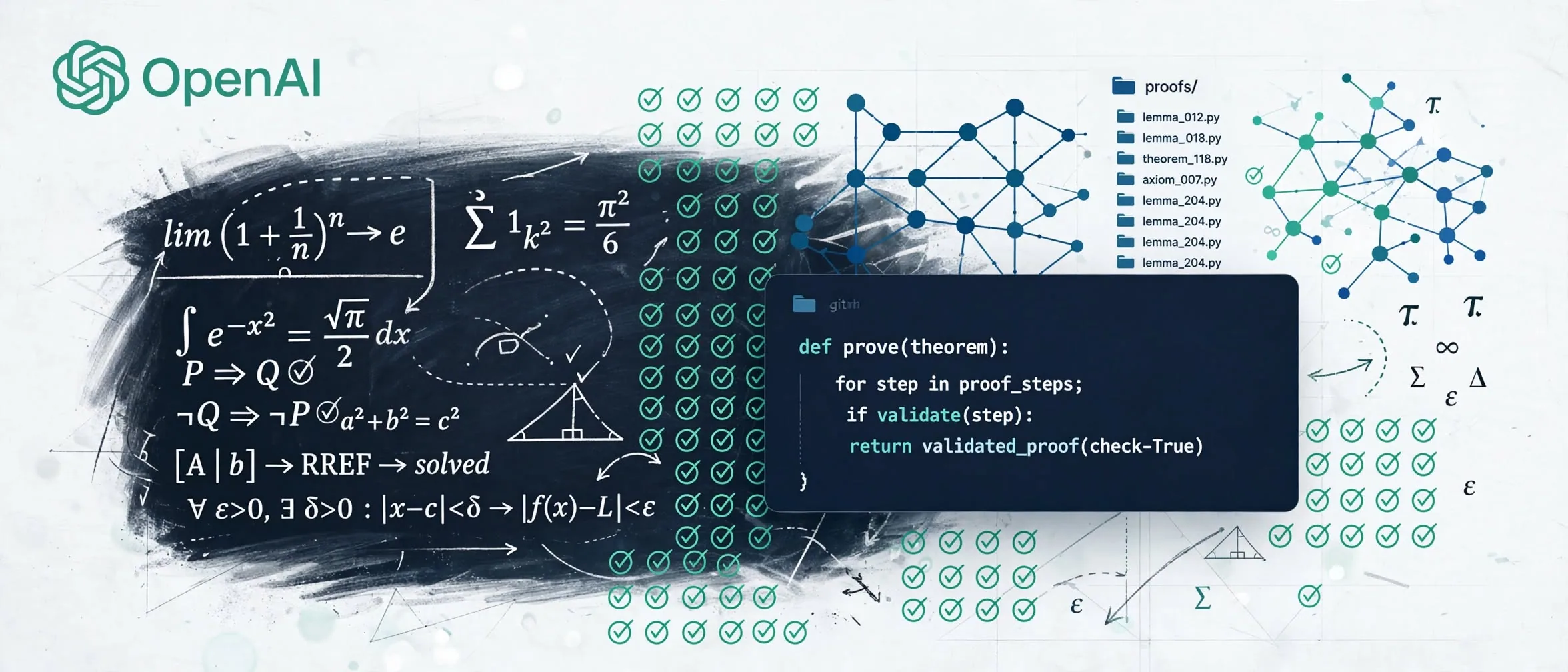
OpenAI Publishes 372 AI Math Proofs on GitHub
OpenAI released 372 AI-generated math proofs on GitHub, using Lean for machine verification and averaging three hours of compute per result.